|
Home Calendar of Town Events Departments Directory Documents Events & Notices E-Mail Forum General Information Historic Buildings History & Environment In the News Links Meeting Minutes Pictures Recreation and Activities Road Directions Snowfall Businesses
| |
|
Washington
Wildlife |
| |
|
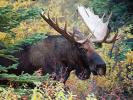
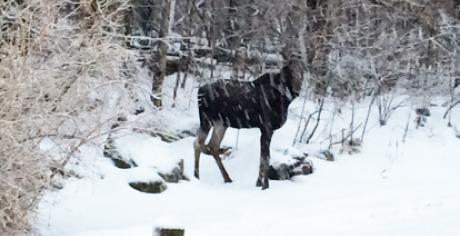
Photo gallery of moose rescue from the ice on Butterfield Pond in
Pillsbury State Park on 01/03/12. |
| |
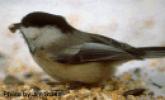
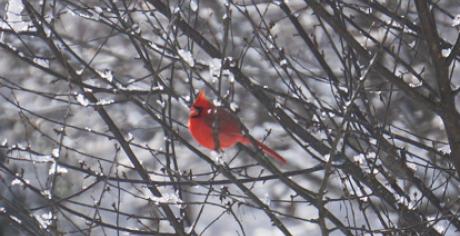
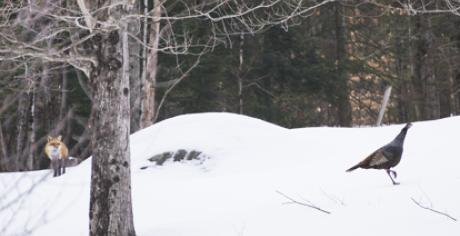
| Photos of the area
wildlife taken by area residents, employees and visitors. |
| |
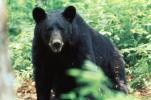
Jen
& Herb Spiller caught this bear crossing their yard in August of 2011.
Boo-Boo stayed in the area while visiting other yards and crossing the
road. |
| |
 Island Ponders: Thank you for all your feedback
regarding Island Pond loons. All the credit for the photos goes to my
husband, Charles, who takes photos with a 300mm telephoto lens so as not
to disturb the loons, as the Common Loon is listed as a threatened
species in New Hampshire. A biologist from the Loon Preservation Society
(LPC) visits our pond a few times a season to educate, observe, and
collect and analyze egg fragments from the nest. I report updates to
her, as warranted, throughout the season. Last summer Charles was able
to get a (most helpful to the biologist) photo of our banded male. The
biologist then referred to her notebook of banded loons and reported our
male has been on our pond since 2005. How fortunate we are to have an
ideal habitat which supports successful yearly hatchings.
Sarah Baker, LPC's biologist, who will be out on the pond tomorrow,
wants to thank us all for doing our part to help bring these chicks to
adulthood, and to remind us of the greatest threat to loon chicks as
stated below:
"Threats to Loons
Disturbance
High speed watercraft sometimes kill or injure chicks or adults due to
collisions. Boats may also get between chicks and adults, causing them
to separate and exposing chicks to increased risk of predation. Loon
chicks are buoyant and can not dive to get away from fast moving boats.
What You Can Do to Avoid Disturbing Loons
You can help avoid disturbing loons by keeping your distance. A good
rule of thumb is to try to stay at least 100 feet or more away from nest
sites, or from any loons that are showing signs of 'distress' or
disturbance.
Here are some loon disturbance behaviors to watch for, that indicate you
are getting too close:
Brow of bird is a 'square' shape, rather than smoothly rounded.
Bill is pointed up, neck is stretched up, bird looks alert.
Bird 'dances' upright on the water, while flapping wings.
Bird's neck and body are stretched out low on nest or on water.
Bird makes a 'tremolo' (laughing sound) or 'yodel' call.
If you observe any of these behaviors, please make sure you
increase the distance between yourself and the loon."
Thanks for your interest, Kate
|
|